ISO the Perfect Camel Coat

My current camel coat collection.

Why focus on the camel coat?

Growing up, the highest quality coat I owned was probably a charcoal grey pea coat that my mom bought for me during a Black Friday sale during the late 2000s. The coat hung in my closet for years before I wore it. The color felt too mature for me, and by the time I cut off the tags, my body had changed so the fit was no longer flattering. I kept the coat until my last year of college, even though I hated the way it looked.

The aforementioned coat. Too tight and too long in the wrong places.

Throughout college, I bought two similar coats in hopes of replacing the one above. One was a light grey duster jacket from Forever 21, which I purchased for about $30 and wore for about three years. The other one was a navy collarless coat from Uniqlo that I purchased for $42 but only wore for a year.

The Forever 21 duster that lasted a surprisingly long time as compared to the other fast fashion items I’ve purchased.
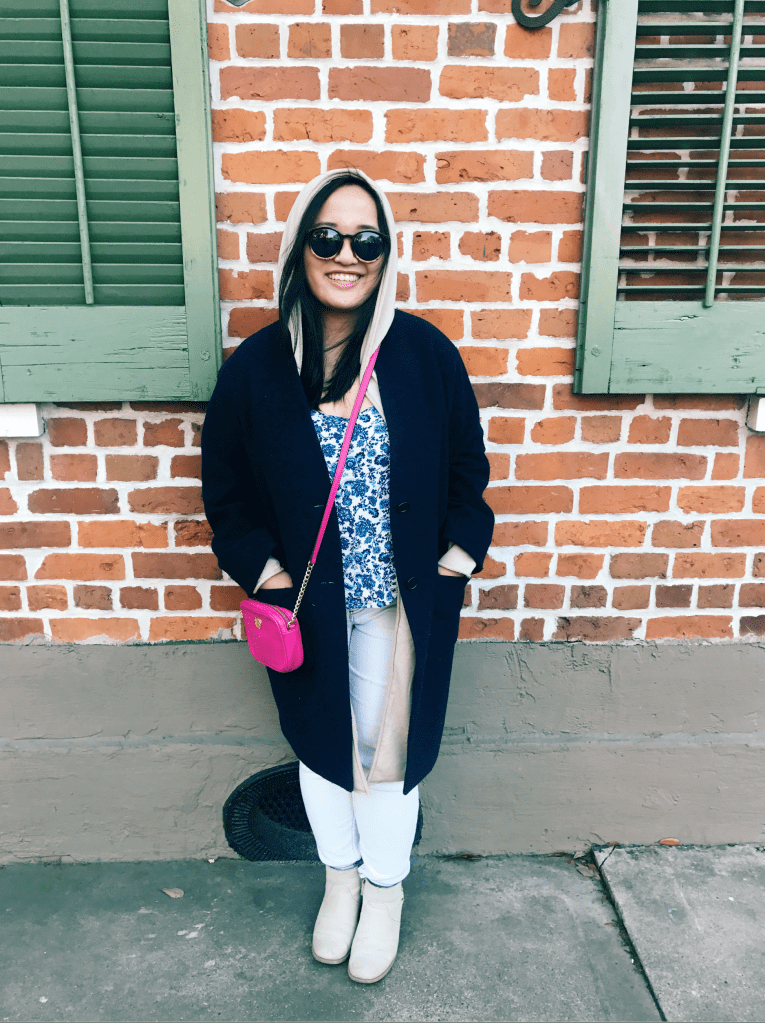
The Uniqlo navy coat. This photo is from New Orleans in the spring. This coat clearly wasn’t keeping me warm, as I had to double up on outerwear. I remember purchasing the inner layer on the trip from Forever 21. Both of these layers only lasted about a year in my closet.

I had considered the cut, color, and cost when purchasing these items, but had failed to consider the fabric composition and quality. As a result, both of these coats were eventually retired from my closet when they pilled to the point of no repair. I’ve learned that I’m better off wearing what I already own while saving up for the item I actually want, as opposed to settling for a more affordable substitute of a lower quality.

I’ve always loved coats, even if I didn’t love the coats I owned. I knew that a classic camel coat was one of the first investments I wanted to save up for after moving to NYC.

Closet Stats

I own three classic camel coats that I love for different reasons, and don’t plan to purchase any more… ideally forever! A few stats that jumped out to me when examining these coats in relation to the rest of my inventory:

  • I paid nearly full price for all of these coats, as compared to the average discount on retail I paid across all of my outerwear pieces (38% off) or across my entire wardrobe (27% off).
  • Of the five clothing items in my wardrobe I’ve purchased on vacation, three of them (60%) were outerwear pieces. One of those three was a camel coat.
  • There is a clear positive correlation between the year of purchase and the quality of fabric composition. The first coat I purchased in 2017 was made from 80% wool and 20% synthetic fibers; the second coat I purchased in 2019 was made from a wool/cashmere blend from deadstock fabric; and the third coat I purchased in 2020 was made from 100% cashmere.

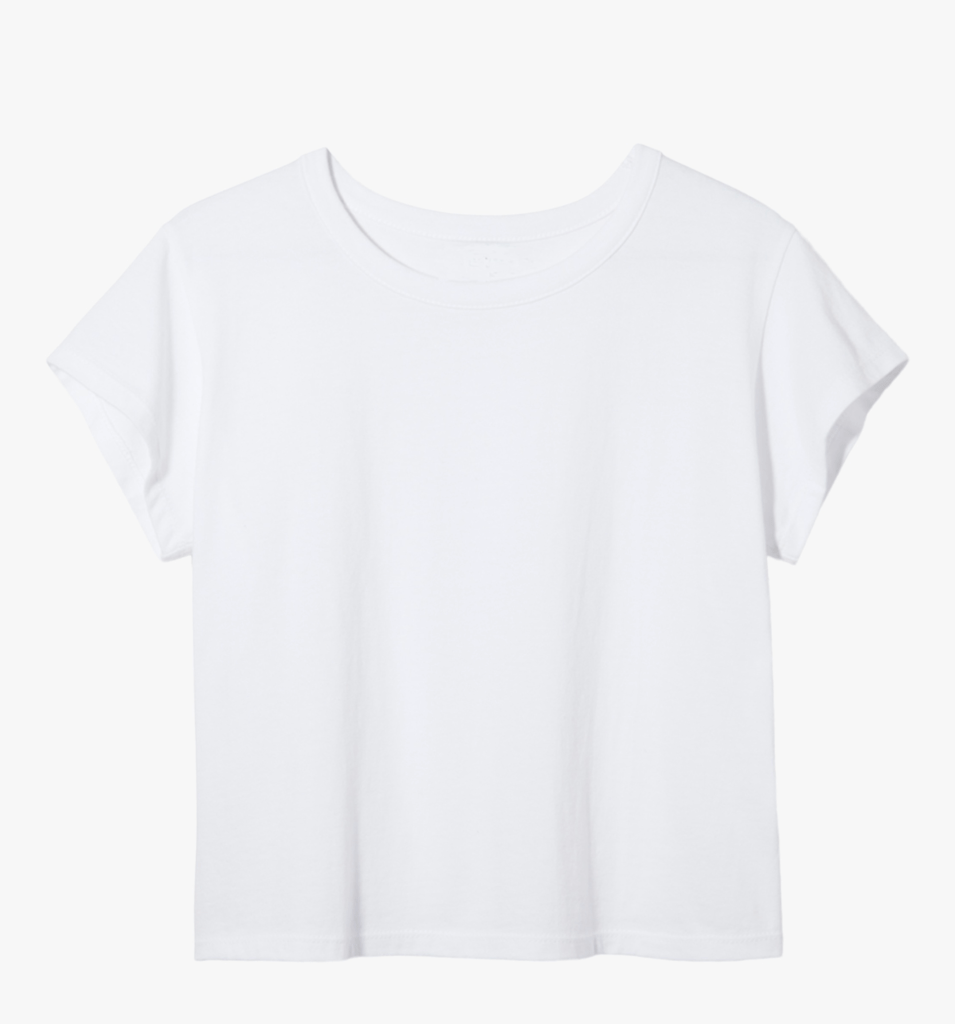
Though both classics, I’ve noticed that camel coats have far more staying power in my closet than white tees for example. The oldest camel coat I’ve owned has been in my wardrobe for nearly three years, whereas the oldest white tee-shirt has only been in my wardrobe for a mere two months (working on making this number much higher in the white tee category).

I’ve also realized through writing this post and recently assessing my wardrobe that I’m prone to collecting three-of-a-kind in my favorite categories. Case in point: I own three camel coats, three black leather jackets, three silk slip skirts… and so on. I love uncovering insights like this from analyzing my wardrobe data, as it enables me to break my subconscious purchasing habits.

THE Closet Heroes

  • The Cashmere Camel Coat from The Curated | Added June 2020 | Purchased on Facebook Sample Sale | This coat is by far the most luxurious coat in my wardrobe, and I plan to wear it as much as possible for as long as possible to minimize my cost per wear. From an ESG standpoint, I appreciate that the coat is created from leftover ERDOS fabric and that the company’s mission is to reduce waste by delivering sustainable, slow fashion staples.
  • Long Camel Coat (no longer available) from Livia Arena | Added August 2019 | Purchased in Melbourne, Australia | I saw this coat on display in the Livia Arena store when I was having a “shopping day” around Melbourne. Though there are definitely some purchases I’ve made on vacation I now regret, this is not one of them. The business student in me particularly loves that Livia Arena produces their garments in the same location as their storefront in order to reduce carbon waste while speeding up their time to market. Livia Arena’s business model reminds me of the famous (or infamous) Zara supply-chain case study, but with a sustainable twist.
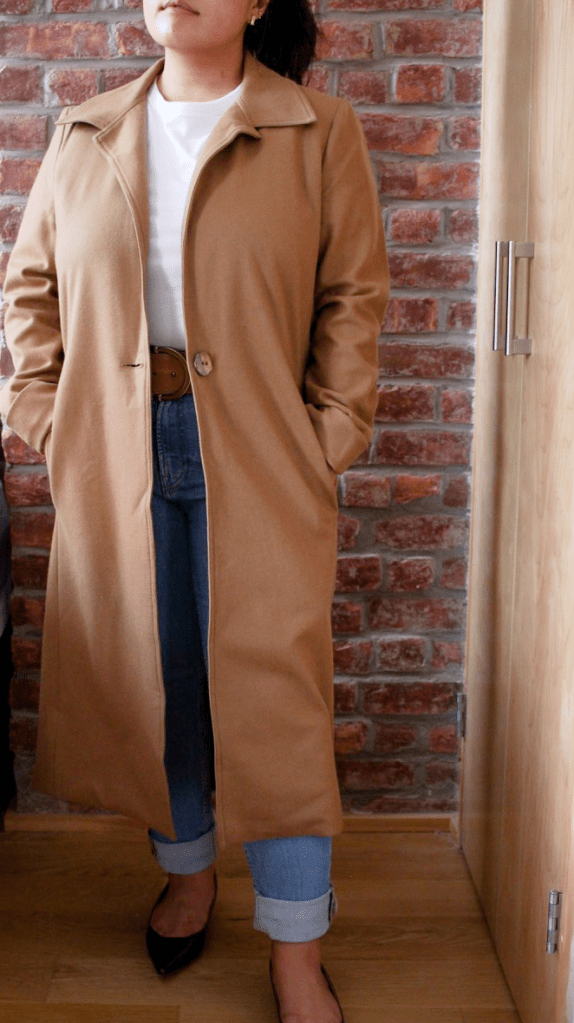
  • Joe Coat (available pre-loved) from Sezane | Added November 2017 | Tailored to shorten sleeves | Purchased in Sezane’s NYC store | I remember looking at this coat for weeks online before going in-store to Sezane for the first time to try it on. As silly as it may sound, this coat will always hold a special place in my heart as I can still recall the excitement I felt when I bought it.
Taken one week after purchasing the coat. There are still buttons on the side of each sleeve here, which were removed when I got the sleeves tailored shorter.

ISO the Perfect: White Tee

Why focus on the basic tee?

Tees are ubiquitous in our closets. As such, it’s very easy to overlook the environmental impact of this seemingly innocuous closet staple. I’ve seen various stats that attempt to quantify the impact of the basic tee’s lifecycle. While some stats are easier than others to quantify (e.g. it takes 2,700 liters of water to grow the cotton required to produce a single tee), other stats are harder to nail down (e.g. water/energy waste from washing/drying the tee between wears).

I found this article on the subject particularly interesting.

How can we do better?

Although some fashion companies across the sustainability spectrum from Patagonia to H&M are incorporating recycled fibers into production, the technology and incentives to efficiently mass produce recycled garments don’t yet exist.

I think we need to shift our mentality to view tees as investment pieces rather than as replaceable basics. I’ve definitely been guilty of ruining a few white tees from being lazy when separating my laundry, knowing I could just buy a cheap replacement. (Don’t do this!)

Since demand drives supply, I believe one of the best ways to decrease the amount of textile waste in landfills attributed to tees is to reduce the number of shirts we produce to begin with. One action item I’ve thought about recently is engaging the organizations to which we belong. For example, my company gives out about about two free shirts per year for one-day charity events to thousands of employees and participants. How often do people wear these shirts after the event? Personally, I never rewear them.

Finding new technologies and applications for recycling fabric waste is great, but reducing the amount of resources we consume is even better. The philosophy of consuming less is one I’ve been translating into my buying habits.

CLOSET STATS

I currently own 5 white tees, in 3 distinct styles (as of August 2020). Since I began tracking my wardrobe data in 2017, I’ve retired 11 white tees in 9 distinct styles, which adds up to $167 wasted. I found it very difficult to resell my tees online, and eventually ended up donating the fabric in hopes it would be recycled. Sadly, I know there’s a non-zero chance they’ll end up in the landfill regardless. This is why I’ve focused on bringing fewer tees into my life.

I took a closer look at the tees I’ve retired from my wardrobe inventory since 2017, and analyzed the reasons they lacked longevity in my closet. From this exercise, I was able to clearly articulate my style requirements for this staple.

Definition of a Perfect White Tee (for me)

  • Cropped length. My ideal tee-shirt length is about 20″. Figuring this out has helped me avoid buying tops that don’t meet this criteria. When I shop online, I’ll check for the dimensions before purchasing a tee (or any item really) and if they aren’t listed, I won’t buy it.
  • No bra lines. This one is definitely a dealbreaker for me, and one of the main reasons I won’t buy a tee shirt, particularly a white one.
  • Crew neckline. I’ve owned tees with necklines too high, too low, and too stylized for my taste.

Here are some photos of some of the eleven tees I’ve retired for failing to meet one or more of the requirements above.

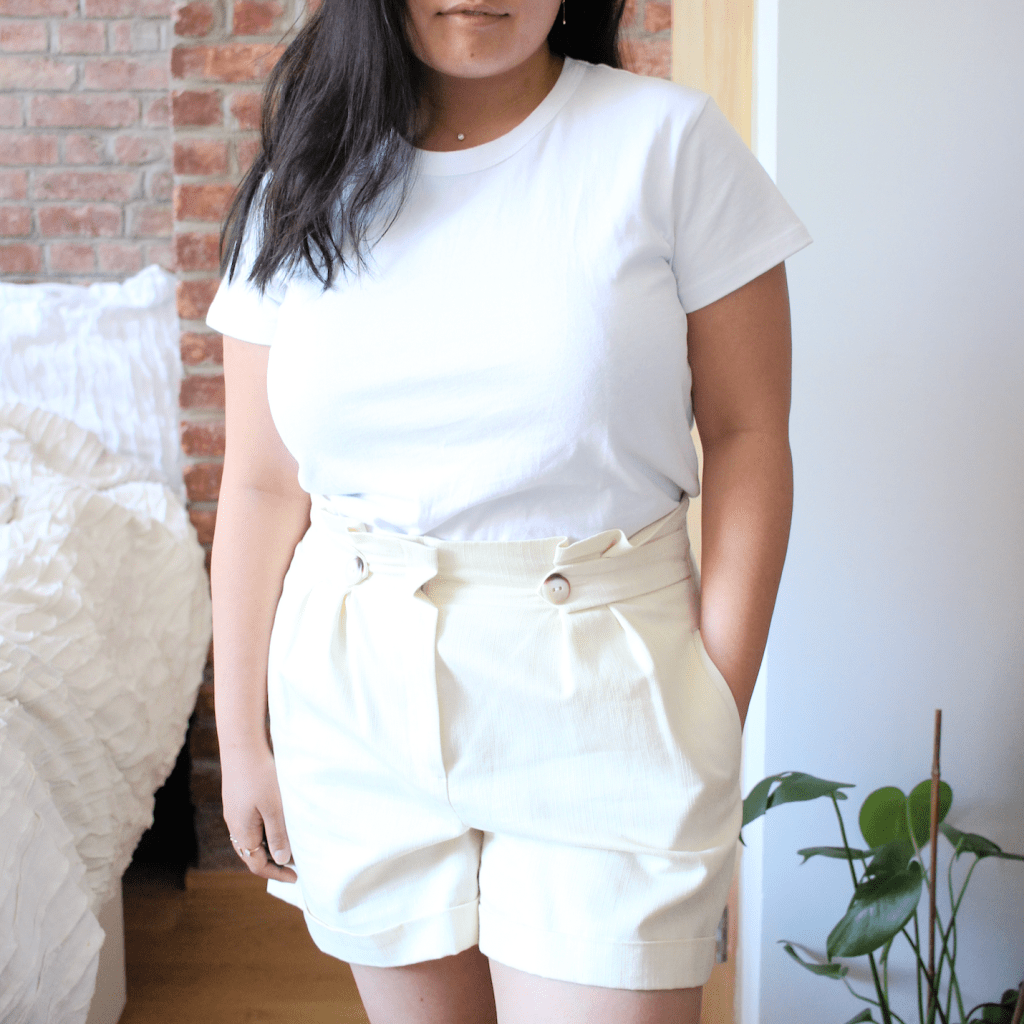
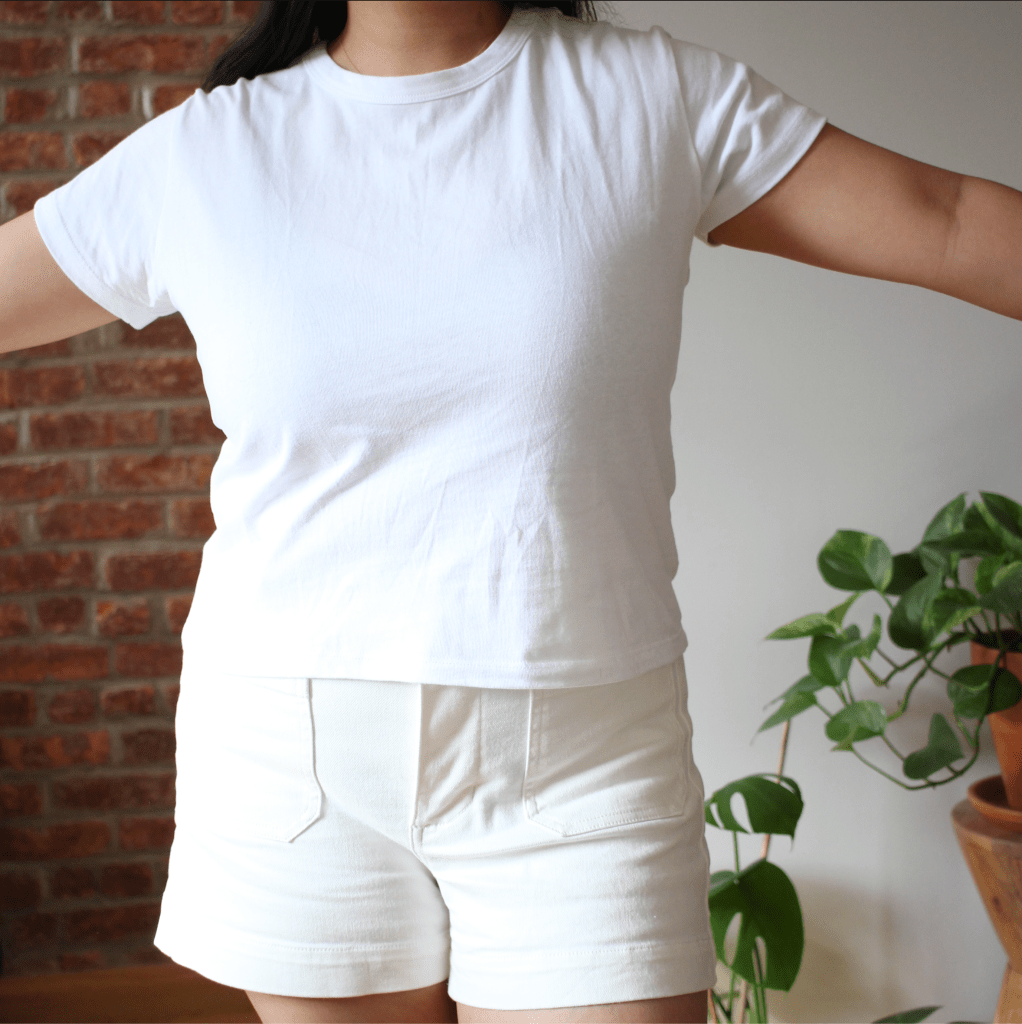
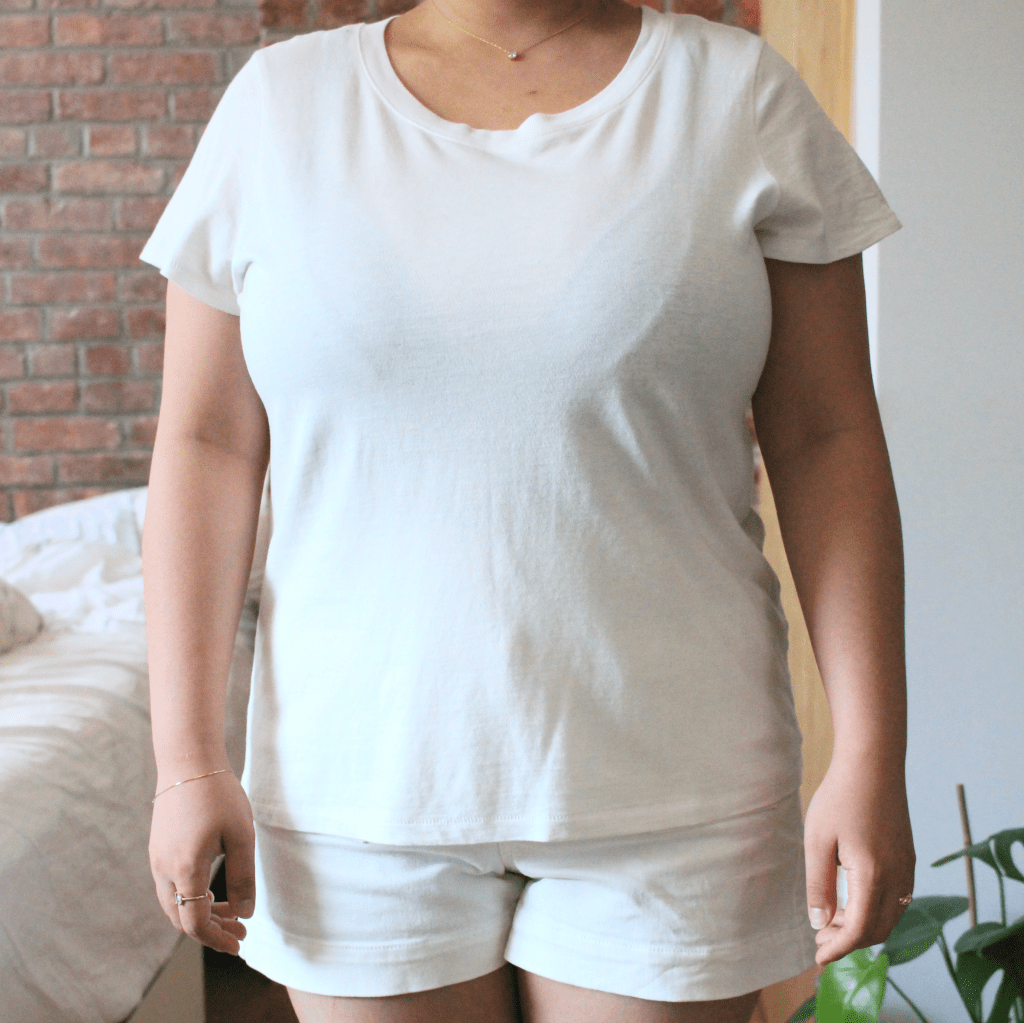
This is the Madewell Northside Vintage Tee that helped me define what I care about in a white tee. This tee is too long on me, too sheer, and doesn’t fit right – the neckline has an odd wrinkle instead of laying flat. I mindlessly repurchased this tee after I stained the first one I owned.
This is the Everlane Box Cut Tee. Like the Madwell tee, I repurchased this tee and shouldn’t have. I find the neckline too low on me, especially when tucked into shorts. The sleeves are slightly too long for my frame as well.
This is the Everlane Turtleneck Short Sleeve Tee. I loved it in the fitting room, and barely wore it after purchasing it.

The Closet Heroes

These are the 3 styles of tees I have in my wardrobe today.

  • Women’s U-Neck Crew Short-Sleeve Tee from Uniqlo | $14.90 (purchased in-store, bought one on sale for $9.90) | Own 2 | Added August 2020 | I purchased this in-store, so I didn’t know the length until I looked it up for this post. The tee is 23″ inches, which is the same length as the Madewell Northside Tee I retired. The difference comes down to the fabric, as this is a very thick tee so it has more structure. I exclusively wear these tucked, as opposed to the Girlfriend Collective tees.
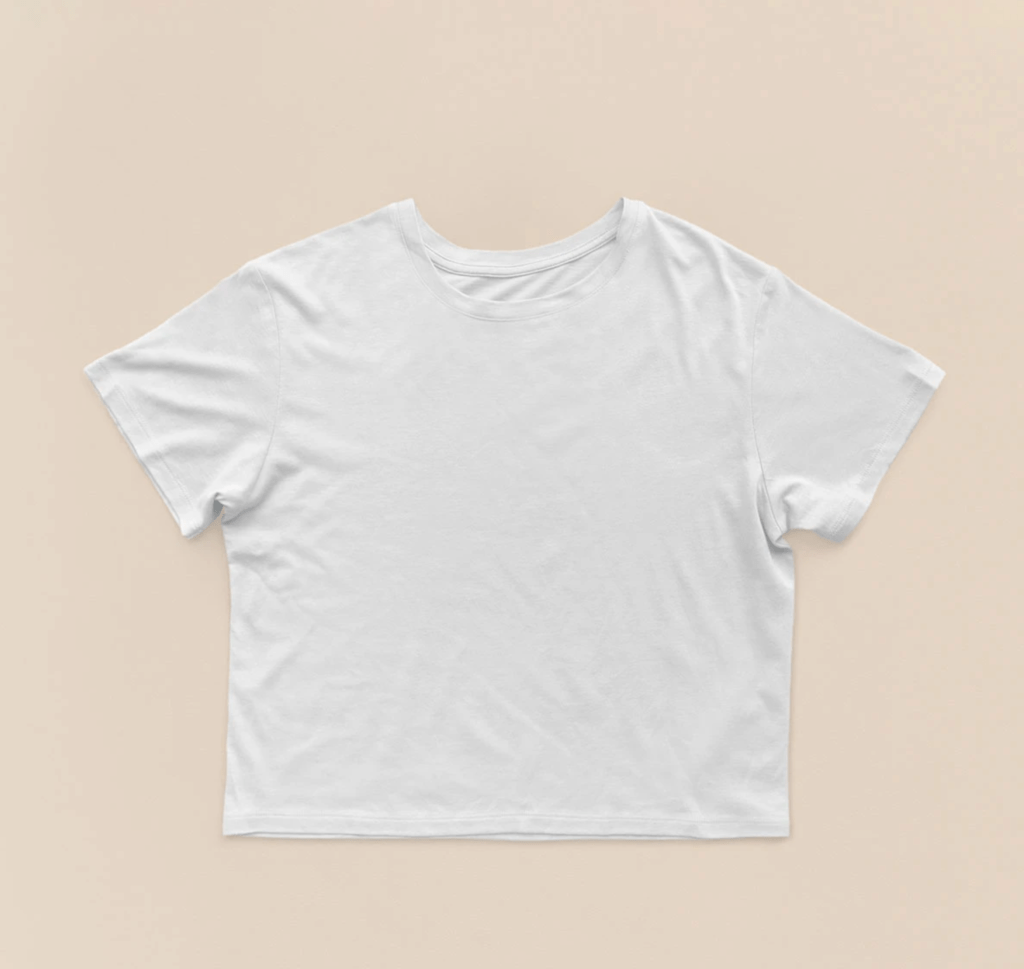
  • White Gia Crop Tee from Girlfriend Collective I $38 (purchased online, bought both with reward credit discount) | Own 1 | Added July 2020 | I own two of these: one in a size small and one in a size medium, which are 19″ and 19.5″ long respectively. I exclusively wear these untucked as the length is just a bit too short for tucking. I love that the fabric is 70% cupro, a sustainable fabric made out of cotton waste.
  • Margo Tee from Leset | $58 (purchased online, full-price) | Own 1 | Added July 2020 | Length is perfect at 20″ for wearing tucked or untucked, which makes this the most versatile white tee I own. The fabric has a nice weight to it, which makes it drape nicely.

If I had to pick only one to keep, it would be the Margo Tee from Leset for its versatility, and ideally, its longevity in my closet.

ISO the Perfect

I’m excited to launch my “ISO the Perfect” Series, in which I look back on a few years of my wardrobe inventory data to explore my imperfect journey towards finding my closet heroes.

In my opinion, there are two types of perfect. The first is the type that seems so obvious and intuitive to you and everyone else that in a perfect world it would simply be considered standard; but, in reality, in our flawed world, what should be considered standard is actually so rare that it has to be elevated to the level of “perfect”. This is the type of perfect that makes you and most other people think, “Why isn’t everything like this? Why is it so hard to find . . . ” a black V-neck cotton sweater, or a casual non-chain restaurant with comfortable booths, etc.—”that is exactly the way everyone knows something like this should be?” “Perfect,” we all say with relief when we finally find something like this that is exactly as it should be. “Perfect. Why was this so hard to find?”

One More Thing and Other Stories, B.J. Novak

I came across this passage many years ago, and reading it at the time, it made me think of my search for the elusive, perfect white tee. Only a few weeks ago did I finally find the one for me, after hours of research and years of searching.

Here is the line-up of categories I plan to explore:

  • White Tee
  • White Button-Down
  • Black Sweater
  • White Sneakers
  • Camel Coat
  • Black Leather Jacket
  • Little Black Dress
  • Silk Slip Dress

The pieces I’ve chosen to examine are quite basic and neutral. I’ve read many over-recycled lists claiming these items are “absolutely essential” in a capsule/minimal/whatever-you-want-to-call-it wardrobe that you “absolutely need” to own. When I first dove into the world of capsule wardrobes, I tried to check off these lists as quickly as possible, buying the first thing I could find that fit me and feeling great about myself if I bought it from a “sustainable fashion company”.

Looking back at the items in these categories I’ve purchased and since let go, I have to acknowledge how much money I’ve wasted by settling on a “well, it fits” mentality instead of patiently passing on items until I found exactly what I was looking for. I’m fully conscious of the fact that buying items from sustainable brands doesn’t make my closet sustainable. This idea is one I’ve thought about a lot recently given my own uptick in consumption, as well as watching brands I used to love become more focused on consumerism and green-washed marketing over quality and intentional design.

My closet in 2017, when I first began to learn about the world of sustainable fashion.
Some favorite pieces of my closet in August 2020.

I believe that analyzing my past mistakes is one of the best ways to learn from them, and luckily I have years of data to learn from to create this series. I’ll end with a quote that is also a reminder to myself:

If we all strived for perfect perfection on matching prints and colors and textures… then if it were me, I would just be naked all the time because I would never be happy. I think striving for perfection in what we wear is a huge inhibitor to being happy with what we already have.

If I had a 25 item summer wardrobe, Alyssa Beltempo

Closet Initiation

The below statistics are based on my closet dataset as of August 1st, 2020. These statistics are meant to serve as a baseline for comparison going forward.

Closet Count

Below is a count by category of the items I consider to be in my active wardrobe regardless of seasonality.

CategoryCount
Tops43
Bottoms30
Dresses22
Outers36
Shoes33
Bags26
Extras*4
Total194
Data as of August 1st, 2020. Extras include scarves and belts. Extras currently excludes swimwear, eyewear, jewelry, and hair accessories.

Brand Count

The items above were purchased from 52 distinct brands. My top 5 brands make up slightly over half of my wardrobe.

BrandCount
Everlane33
Theory23
Madewell20
Sezane14
Italic10
Total100
Data as of August 1st, 2020.

Year Purchased

My active wardrobe is about the same size in previous years. I moved earlier this year, and actually downsized my closet quite a bit during the move.

However, I seem to have followed the one-in-one-out pattern as opposed to downsizing long-term. I’ve added the majority of my active wardrobe between April and July of this year.

Year of PurchaseCount
20141
20151
20160
201712
201822
201952
2020106
Total194
Data as of August 1st, 2020.

Pandemic Impact

Looking closer at the 2020 data, I notice a few trends in my consumption this year:

  • I did not start shopping until a few weeks after shelter-in-place orders were enacted in NYC around mid-March.
  • Almost all of my shopping has been online in 2020. Excluding purchases made in 2020 from my active wardrobe, historically 38 percent of my active wardrobe was purchased in-store.

My online shopping habits have clearly mimicked my desires over the last few months, from comfort at home to a return to normalcy. In April, I mostly purchased work from home items such as slippers and comfy loungewear. In June, I mostly purchased bags and shoes, despite not using these items at home.

MonthCountOnlineRetailPhone
Jan8710
Feb4310
Mar5410
Apr171700
May212100
Jun292900
Jul272511
Total10610141
Data as of August 1st, 2020.

I seem to buy more when I shop online (unlimited time to browse) as opposed to in-store (limited store hours). I’ve also noticed more online sales this year than in other years, and I do love a good deal.

For the rest of this year, I’m focusing on putting what I already own to use, paring down my closet, and avoiding shopping for the sake of it.